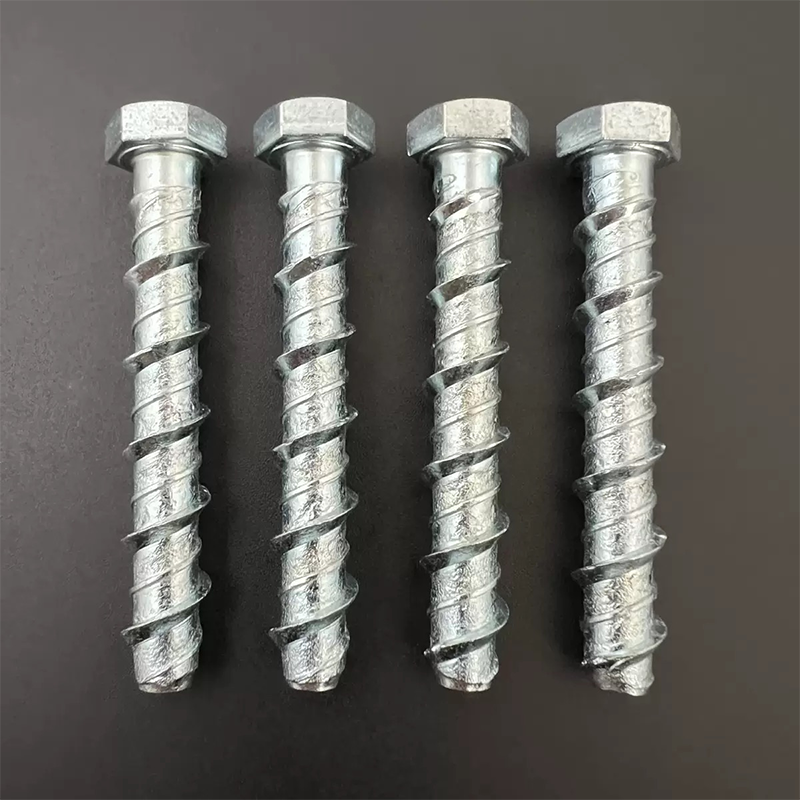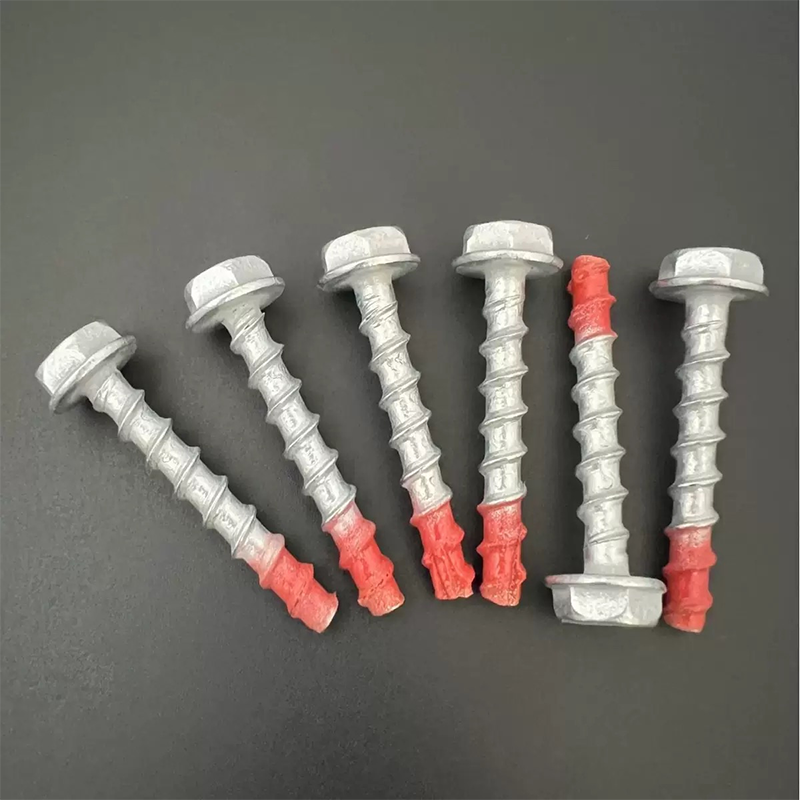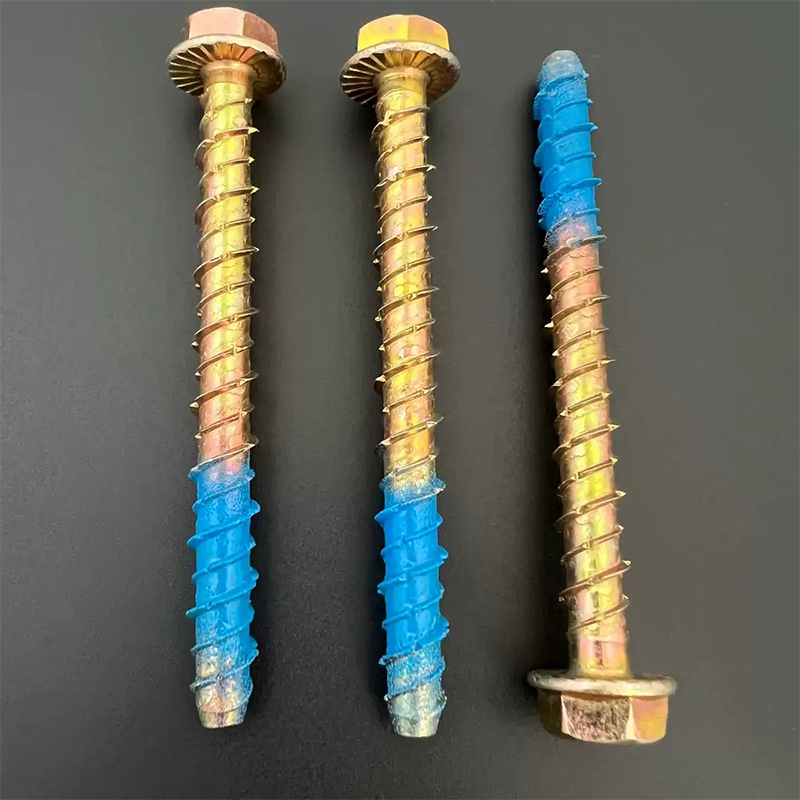

Chemical anchor bolts are high-performance fastening systems that utilize adhesive resin or mortar to bond the bolt securely into concrete, masonry, or stone substrates. Unlike mechanical anchors that rely on expansion, chemical anchors distribute load through adhesive bonding, providing superior pull-out resistance and load capacity even in cracked concrete or challenging conditions. Available in carbon steel, stainless steel (A2/A4), and hot-dip galvanized finishes, with diameters from M6 to M48 and custom lengths. The system includes threaded rod, resin capsule or injectable mortar, and installation accessories — all configurable to your specific substrate and load requirements.
Mechanical anchors rely on expansion forces against the concrete wall, which can lose holding capacity in cracked concrete. Chemical anchors use adhesive bonding to distribute load along the entire embedment depth, providing superior pull-out resistance even in cracked substrates, with higher load capacities and better dynamic performance.
Curing time depends on the resin type and ambient temperature. Polyester typically cures in 5-30 minutes, epoxy in 15-60 minutes, and vinylester in 10-45 minutes at 20°C. Lower temperatures require longer curing times. Always refer to the manufacturer's technical data sheet for specific curing schedules and full load cure times.
Yes — specially formulated epoxy and vinylester resins are available for wet and underwater installations. These systems displace water during injection and cure reliably in moist conditions. Standard polyester resins are not suitable for wet installations and should be used in dry environments only.
All parameters are customizable: material grade (carbon steel, stainless, HDG), diameter (M6-M48), length (50-600mm), thread type (metric, UNC, custom), resin type (polyester, epoxy, vinylester), capsule or injection system, and special coatings for aggressive environments.

The purchasing manager for a machinery OEM opened a fresh quotation and saw M4...
View MoreThirty thousand custom screws arrive at an assembly plant, and the line stops. ...
View MoreA European distributor once received 120,000 stainless steel machine screws fr...
View MoreWhy Non-Standard Screw Production Needs a Different Quality Control Process Con...
View MoreThe thread design of a custom screw decides whether the fastener will hold, str...
View MoreConsider a purchasing engineer who ordered 5,000 non-standard screws in a 10.9 ...
View More


Please complete the form below and one of our team will get back to you as soon as possible.

preferential ADD list(39.6%) TARIC additional code C850
Tel: (0573) 8287 9590
Fax: (0573) 8287 9590
Emai: [email protected]
Add: Building 3, No. 98 Yiqun Road, Yaozhuang Town, Jiashan County, Zhejiang Province
1858Jiagang Road,Nanhu Distrist,Jiangxing City,Zhejiang Province.China(P.C.:314005)
Copyright © Zhejiang Donghe Machinery Technology Co., Ltd. All Rights Reserved.