Article Directory
Mounting an electronics module inside a 1.5mm steel enclosure, you discover the M4 countersunk flat head screw you specified requires 2.7mm of head depth. The screw protrudes through the back side, and the panel is too thin to allow a wider countersink. Undercut flat head screws solve this exact problem by reducing the head height while keeping the same outer diameter. This is a common challenge in sheet metal fabrication, electronics assembly, and thin-wall plastic molding, and it is one of the main reasons engineers specify undercut geometry.
What Are Undercut Flat Head Screws
Undercut flat head screws are countersunk fasteners whose head height has been reduced to approximately 50 to 60 percent of a standard flat head screw, allowing flush seating in material much thinner than a standard design permits.
Core Definition: An undercut flat head screw combines a 90-degree or 82-degree countersunk head with a reduced head height, so the head disappears below the surface even when the host material is only 1.2mm to 2.5mm thick.
M4 undercut requires only 1.5mm material depth versus 2.7mm for a standard flat head.
Head Height Comparison by Screw Size
Values shown in millimetres. Standard data from DIN 963; undercut values represent typical machined geometry.
In standard DIN 963, a countersunk flat head screw carries its full head height above the bearing surface. The undercut version removes excess head material while retaining the same outer diameter, which lets the screw head sit flush without piercing the back side of a thin panel. The geometry is defined by the countersink angle, the head diameter, and the head height. Most undercut screws use a 90-degree countersink, but an 82-degree version is also available for applications that need a shallower bearing surface. The drive recess can be Torx, Phillips, hex, or slotted depending on the torque requirement.
Key Applications of Undercut Flat Head Screws
Undercut flat head screws are used in sheet metal enclosures, electronics housings, automotive interior trim, aerospace cabin interiors, appliance panels, and any assembly where material thickness is insufficient for a standard countersunk head.
- Sheet metal control panels: 1.0-2.0mm galvanized steel, undercut M4 screws keep the head flush.
- Electronics housings: aluminum and plastic enclosures as thin as 1.2mm.
- Automotive interior trim: ABS and polycarbonate panels, often with hidden fastening points.
- Aerospace cabin interiors: composite panels where weight and flushness both matter.
- Appliance manufacturing: refrigerator doors and washing machine panels.
- Audio and video equipment: rack-mounted gear with thin faceplates.
Flush seating matters not only for appearance. In electronics enclosures, a protruding screw head can reduce internal clearance for components or interfere with the mating cover. In automotive trim, a raised head can cause a visible gap or an uneven surface. In aerospace cabin interiors, even a 0.5mm protrusion can be unacceptable. The countersink head on an undercut screw works the same way as on a standard flat head screw, but with a shallower profile. If you are working with self-tapping undercut screws, see our guide on countersunk head self-tapping screw features and benefits for deeper context.
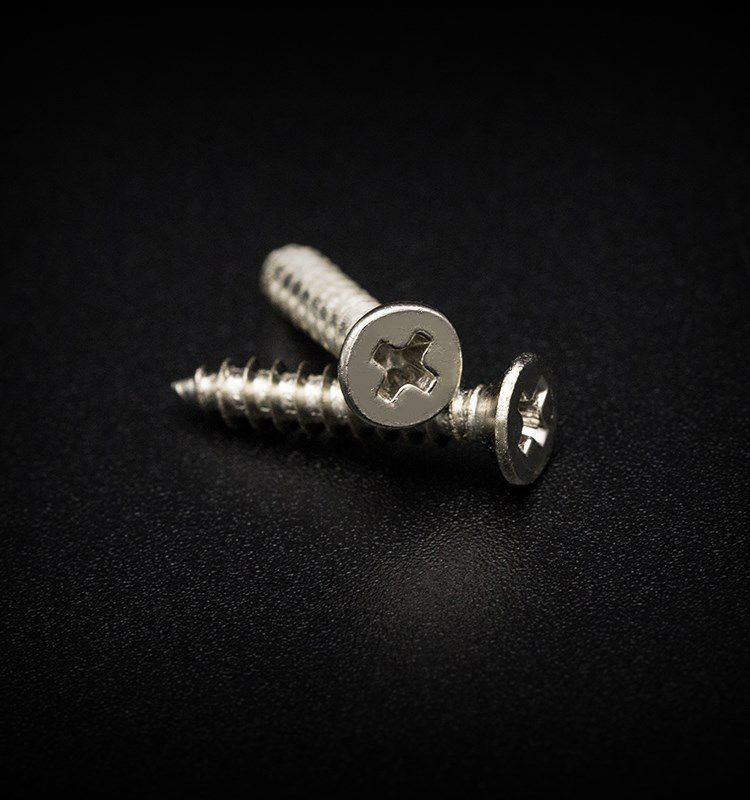 Countersunk Head Aluminum Self-Tapping Screw for Flush FinishesThis aluminum self-tapping screw features a countersunk head for a flush or sub-flush finish, reducing weight and resisting corrosion. Ideal for thin materials where a standard countersink would protrude.View Product →
Selection rule of thumb: if the material is thinner than the standard flat head screw head height, use an undercut version.
Selection Factors for Undercut Flat Head Screws
Selecting the right undercut flat head screw involves five measurable factors: head height versus material thickness, drive recess type, thread form, material grade, and surface finish.
| Factor | Specification | Practical Impact |
| Head height | Match undercut height to material thickness | Prevents protrusion or loose seating |
| Drive type | Torx T10 or Phillips #2 | Torque transfer without cam-out |
| Thread form | Coarse or fine thread | Pull-out strength in wood, plastic, or metal |
| Material grade | 304/316 stainless, carbon steel, brass | Corrosion resistance and strength balance |
| Surface finish | Zinc, hot-dip galvanized, passivated | RoHS compliance and corrosion protection |
Head height is the first thing to verify. If the material thickness is 1.5mm and the undercut head height is 1.5mm, the screw sits flush but has no bearing load. Industry practice is to select a head height that is 0.1-0.2mm less than the material thickness, leaving a tiny amount of material below the head to act as a bearing surface. Drive type selection depends on the installation environment and the torque needed. Torx offers the highest torque transfer and lowest cam-out risk. Phillips is more common but prone to cam-out. For safety-critical applications, a hex drive provides a positive engagement that is less likely to strip. To specify these values correctly, a dimension drawing or a well-documented purchase order is essential.
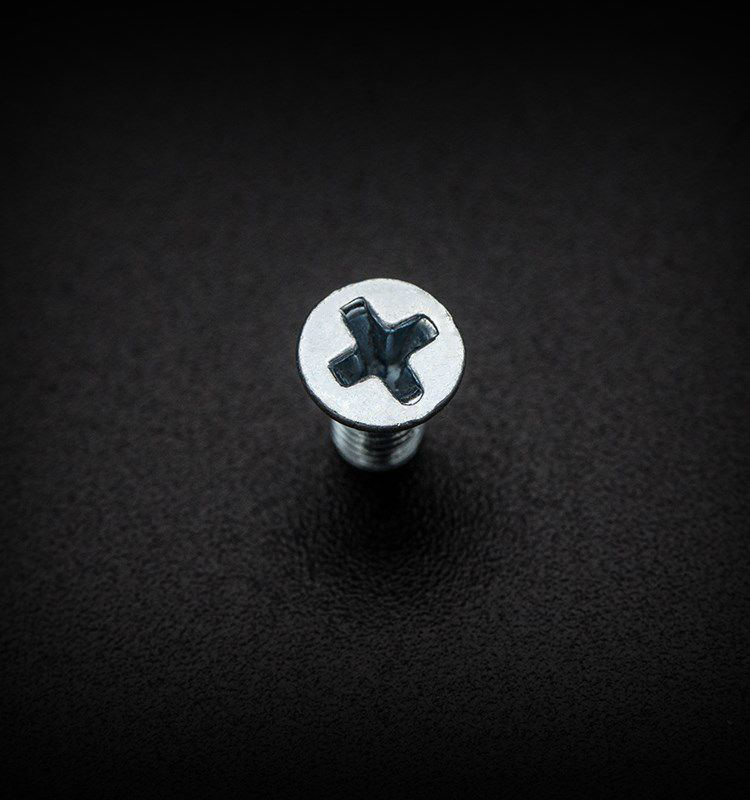 Countersunk Machine Screw Options and Selection GuidanceThese countersunk machine screws offer flush mounting in various materials. Choose from different drives and materials based on torque, environment, and thickness to ensure secure fastening.View Product →
Material and Finish Selection
Stainless steel A2 (304) and A4 (316) are the preferred materials for undercut flat head screws in outdoor or corrosive environments, while zinc-plated carbon steel handles indoor applications in non-humid conditions.
| Material | Grade | Head Strength | Corrosion Resistance | Typical Use |
| 304 Stainless | A2 | High | Excellent | Indoor and outdoor hardware |
| 316 Stainless | A4 | High | Superior | Marine, chemical process |
| Carbon Steel | Zinc plated | Medium | Good with finish | Indoor assembly |
| Brass | CuZn | Low to medium | Fair | Electrical, decorative |
| Titanium | Grade 5 | Very high | Excellent | Aerospace, lightweight |
Each alloy has a specific mechanical profile. For instance, 304 stainless provides high tensile strength and broad corrosion protection, while titanium adds weight savings at a higher cost. Zinc plating is the most common finish for carbon steel undercut flat head screws. It protects against corrosion in indoor environments and provides a stable galvanic couple with many substrates. Hot-dip galvanizing is thicker and better suited to outdoor exposure, but it can affect thread fit tolerance. See our guide on common materials used for machine screws to compare mechanical properties and heat treatment options.
For outdoor or marine applications, 316 stainless steel with a passivated finish is the recommended choice. Do not substitute 304 for 316 when chloride exposure is expected.
Custom Undercut Screws for Precision Applications
When standard off-the-shelf undercut screws do not match your geometry, custom manufacturing can produce the exact head height, drive recess, thread pitch, and material you need.
- Head height machined to a tolerance of ±0.05mm.
- Drive recess available in Torx, Phillips, hex, or slotted.
- Thread forms: machine threads, self-tapping threads, and hi-low threads for plastics.
- Materials: stainless steel, carbon steel, brass, titanium, and aluminum.
- Surface finishes: mechanical zinc plating, hot-dip galvanizing, and passivation.
Custom undercut screws are typically ordered in quantities from 10,000 pieces upward for production runs. At Zhejiang Donghe Machinery Technology Co., Ltd., we manufacture undercut flat head screws in both standard and custom geometries, and our engineering team can match your drawing with tight tolerances.
 Custom Undercut Screws for Production ApplicationsFor production runs, custom undercut screws can be manufactured to your drawings with tight tolerances. Suitable for thin materials where a standard flat head would not seat flush.View Product →
Frequently Asked Questions
What is the difference between a flat head screw and an undercut flat head screw?
A standard flat head screw has a full head height that requires material thick enough to fully countersink it. An undercut flat head screw has a head height reduced to 50-60 percent of the standard, so it can sit flush in material as thin as 1.2mm.
What is the minimum material thickness for an undercut flat head screw?
The minimum material thickness depends on the screw size. For an M4 undercut flat head screw, the head height is approximately 1.5mm, so material must be at least 1.5mm thick plus any countersink depth. For M6, the minimum is around 2.2mm.
Are undercut flat head screws available in stainless steel?
Yes. They are available in 304 (A2) and 316 (A4) stainless steel, which offer excellent corrosion resistance for outdoor, marine, and industrial applications. Carbon steel, brass, and titanium are also available as standard options.
How do I specify an undercut flat head screw for custom manufacturing?
You specify the nominal diameter, head height, countersink angle, drive type, thread form and pitch, material grade, and surface finish. A technical drawing with GD&T callouts helps the manufacturer produce the exact geometry.