Article Directory
- 1 Why Custom Screws Are a Precision Manufacturing Tool
- 2 The Real Cost of Assuming Standard Screws Will Fit
- 3 What Defines a Custom Screw for Precision Work
- 4 Where Custom Screws Deliver Measurable Value
- 5 How to Specify Custom Screws Without Overengineering
- 6 What to Look for in a Custom Fastener Manufacturer
Why Custom Screws Are a Precision Manufacturing Tool
Design engineers often assume that any screw from a catalog will perform the same way on every production line. That assumption fails when a precision assembly needs a tight clamp load, a flush head, or a thread that does not cross-contaminate a clean room. In precision manufacturing, a custom screw is not a workaround. It is a functional component with controlled geometry, material, and tolerance data that turns design intent into repeatable assembly behavior.
Consider an assembly where a standard M4 screw strips its recess during automated driving. The screw meets its standard tolerance, but the combination of a shallow recess, hard plating, and worn driver bit pushes the process outside its stable range. A custom screw with a deeper recess, a sharper thread point, or a reduced-friction coating removes the variability without redesigning the whole machine.
The Real Cost of Assuming Standard Screws Will Fit
Standard fasteners are designed for general use, not for one specific joint. That is not a defect; it is a compromise. In precision work, the consequences of that compromise show up as rework, loose connections, and rejects on the line.
| Standard assumption | Precision reality | Why custom screws help |
|---|---|---|
| Threads engage correctly in every hole | Tolerances stack across coatings, hole size, and alignment | Thread form, pitch diameter, and point geometry can be matched to the actual hole condition |
| Common driver bits fit every screw of the same size | Recess depth and drive fit vary by manufacturer | Head and drive profiles can be tailored to existing tooling and torque limits |
| Material strength is enough if hardness is high | Corrosion, temperature, and vibration change joint behavior | Alloy, heat treatment, and surface coating can be selected from service conditions |
| Torque applied equals clamp load achieved | Friction in threads and under-head surfaces creates wide scatter | Coatings and thread forms can narrow the torque-tension window |
The table is not an argument against standard screws. It is an argument for defining which variables actually matter in your assembly. When the answer is “repeatable performance under specific conditions,” a custom screw lets you control the variables a catalog part cannot.
What Defines a Custom Screw for Precision Work
A custom screw can differ from a standard screw in five areas: geometry, material, surface treatment, tolerance, and verification. In practice, most precision fasteners change more than one.
Geometry and Thread Design
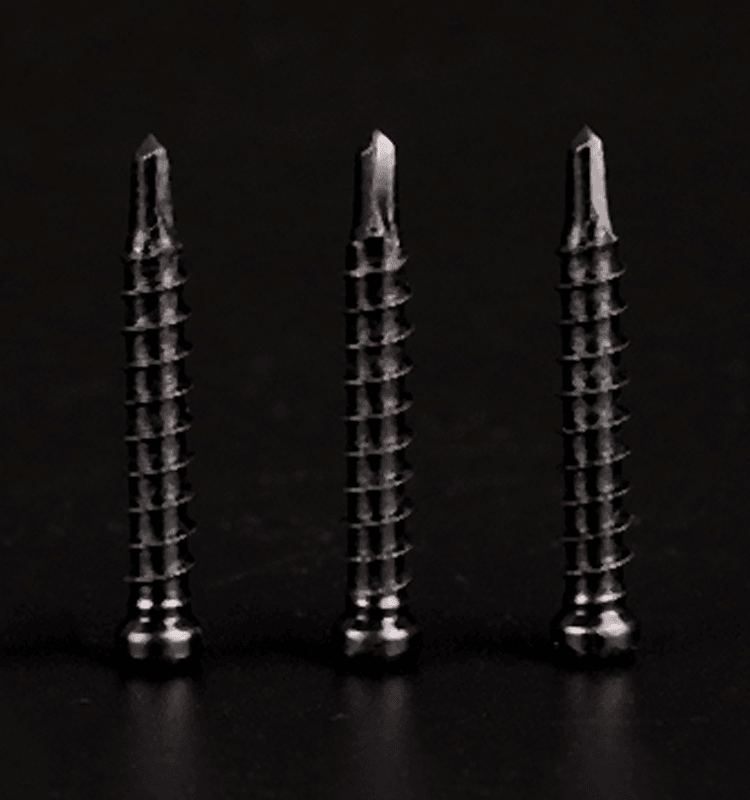
Geometry changes are not limited to the head. A custom screw may have a longer shoulder for alignment, a special point for self-piloting, an asymmetrical under-head radius to reduce stress concentration, or a thread that stops at a precise axial location. These features are often invisible on a general arrangement drawing but decisive on the production line. For example, special-shaped bolt designs combine a non-standard head, shoulder, or thread placement to fit a specific cavity and tooling. A manufacturer that can evaluate special-shaped bolt designs against forming and threading limits will save you from costly redesigns.
 Wholesale Special-shaped bolt Suppliers, ManufacturersWe Wholesale Special-shaped bolt, Zhejiang Donghe Machinery Technology Co., Ltd. Is China OEM/ODM Special-shaped bolt Suppliers And Manuf...View Product →
Material Selection
Material is the second major decision. The screw must resist the service environment and carry the required load. In corrosive, high-temperature, or weight-sensitive applications, a custom screw made from an appropriate alloy prevents failure modes that plated carbon steel cannot. For instance, titanium custom screws offer an excellent strength-to-weight ratio and corrosion resistance, which is why they appear in demanding industries. Before selecting any alloy, compare yield strength, hardness, ductility, thermal expansion, and galvanic compatibility with the mating parts. A useful review of alloy options for corrosive environments can help narrow the choices.
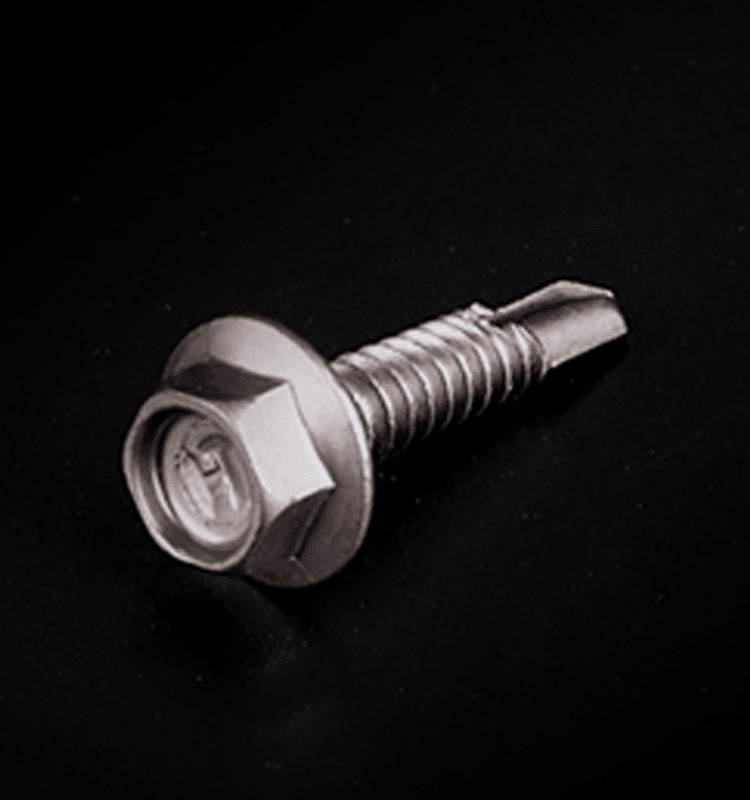
 Wholesale Plain Titanium Hex Bolt M12 x 80mm Suppliers, ManufacturersWe Wholesale Plain Titanium Hex Bolt M12 x 80mm, Zhejiang Donghe Machinery Technology Co., Ltd. Is China OEM/ODM Plain Titanium Hex Bolt ...View Product →
Surface Treatment and Coatings
Surface treatment controls corrosion, friction, and appearance. Common choices include zinc plating, hot-dip galvanizing, passivation, phosphate, and zinc flake coatings; some screws also carry pre-applied thread sealant or a bonded lubricant. The coating changes the torque-tension relationship, so it must be specified with the screw, not added later. For outdoor or high-humidity assemblies, the coating may matter more than the base material.
Tolerance Control and Verification
Precision manufacturing demands control of dimensions that catalog specifications often ignore. Pitch diameter, head perpendicularity, thread runout, surface finish, and under-head radius all influence assembly. A custom screw is only precision if the manufacturer can measure those features consistently. That requires documented process control, calibrated tools, and inspection records. For the same reason, the supplier should be prepared to verify critical dimensions on samples and in production. Process capability matters as much as the drawing.
Where Custom Screws Deliver Measurable Value
Custom screws create measurable value in four situations. When any of these applies, a catalog part will almost certainly cost more over time than a custom screw.
- Automated assembly — consistent drive fit and geometry reduce jams, stripping, and torque-related stops.
- Miniaturized products — standard heads and drives are too large or too shallow for compact device designs.
- Severe service environments — temperature, chemicals, moisture, and vibration require matched alloys and coatings.
- Controlled clamp load — custom thread forms and coatings narrow the torque-tension window, improving joint reliability.
The value appears as lower rework, fewer field failures, and shorter assembly cycles. The total cost of a custom screw is the installed joint cost, not the piece price. If you need a practical starting point, browse custom screw manufacturing options and compare the range of head, thread, and material combinations available.
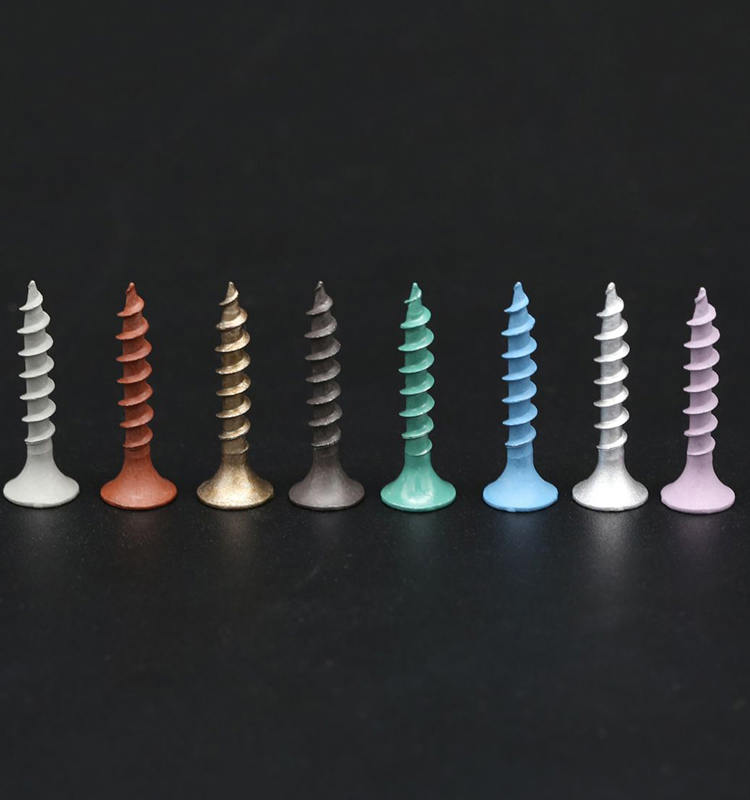
 Custom DIY Industrial Mechanical Fasteners Manufacturers, Factory, ExportersZhejiang Donghe Machinery Technology Co., Ltd. is China DIY Industrial Mechanical Fasteners Manufacturers And OEM/ODM DIY Industrial Mech...View Product →
How to Specify Custom Screws Without Overengineering
The best custom screw specification starts with the joint, not the screw. Specify the function, the loads, the environment, and the assembly method. Then let the fastener design team close the gap.
- Define the functional loads: static, dynamic, thermal, and vibration.
- Identify critical interfaces: hole size, mating material, coating, and lubricant.
- State only the tolerances that affect function. Over-specifying every dimension adds cost and lead time.
- Use standard head styles, drives, and thread pitches where possible to avoid special tooling.
- Request prototypes, torque tests, and inspection data before committing to mass production.
Early collaboration is important. A manufacturer with design and production experience can suggest geometry changes that reduce cost while improving function. The principles for designing non-standard bolts for industrial applications are a good reference before you finalize drawings.
Cost and lead time depend on material, complexity, quantity, and inspection level. A simple thread modification may only need a rolling die change; a complex head form may need CNC machining and custom tooling. If your schedule is tight, review the typical lead time and cost factors for non-standard screws early in the project.
What to Look for in a Custom Fastener Manufacturer
A custom screw is only as good as the process that makes it. The same geometry can be a precision part in one plant and a reject in another. Look for a manufacturer that controls material certification, tooling, heat treatment, surface treatment, and inspection in-house or through traceable partners.
Zhejiang Donghe Machinery Technology Co., Ltd. is a fastener manufacturer with more than 100 machines and an annual capacity of more than 8,000 tons. It operates its own testing laboratory and supplies GB, DIN, ANSI, and BS standard products, as well as non-standard screws manufactured from drawings or samples. The company exports to Europe, Australia, Africa, and the U.S., giving it experience with the documentation and quality expectations of international buyers.
Before selecting a supplier, ask three questions. How does the company inspect critical dimensions? Can it provide material certificates and torque data? What is its process for developing prototypes? The answers will tell you whether the supplier treats custom screws as engineering components or as copy-machine versions of standard parts.
Custom screws are not a workaround. In precision manufacturing, they are a deliberate decision to control the variables that standard fasteners leave open. Specified carefully and manufactured with the right process controls, they become a reliable part of your production system.