Article Directory
- 1 Why Surface Treatment Matters More on Non-Standard Screws
- 2 Common Surface Treatment Options for Custom Screws
- 3 Matching the Finish to the Screw Material
- 4 How to Specify Surface Treatment on a Non-Standard Screw Drawing
- 5 Cost, Lead Time, and What to Verify on Delivery
- 6 Partner with a Manufacturer That Treats Finish as Part of the Design
- 7 Choosing the Right Finish Comes Down to Documentation
Consider a purchasing engineer who ordered 5,000 non-standard screws in a 10.9 strength class with nothing more than "zinc plated" written on the drawing. The parts arrived on schedule, passed the dimensional check, and then failed a 72-hour neutral salt spray test in the first batch. The screw geometry was not the problem. The finish specification was: it did not state coating thickness, passivation type, or whether the parts were baked after plating to relieve hydrogen embrittlement at that hardness level.
That sequence repeats more often than most buyers expect, and it explains why surface treatment deserves a separate review on every custom screw project. On a standard DIN, ISO, or GB fastener, the finish is already defined by convention. On a non-standard screw, there is no default coating, no default thickness, and no default test. You specify it, and the part performs — or fails — based on that choice.
Why Surface Treatment Matters More on Non-Standard Screws
Non-standard screws carry heavier consequences from finish decisions because the part is engineered for one application rather than held in stock for many. Three issues deserve particular attention.
Coating Thickness Changes Thread Fit
Electroplated zinc builds 5 to 12 µm on the surface. Hot-dip galvanizing can add 40 to 80 µm. On a threaded part, those numbers are not trivial: a thick coating reduces the pitch diameter, and a screw plated without allowance can fail a 6H nut gauge even when it passed all measurements before coating. A custom thread drawing should therefore state whether dimensions are valid before coating, after coating, or both, and whether a coating allowance has been built into the thread design.
Hydrogen Embrittlement Is Invisible Until a Screw Snaps
Electrolytic processes such as zinc, cadmium, and nickel plating introduce hydrogen into the steel. In high-strength fasteners — generally above 1000 MPa tensile strength, or roughly property class 10.9 — absorbed hydrogen can cause delayed fracture after assembly. The standard countermeasure is a post-plating bake at 190 to 230 °C for at least four hours, applied shortly after plating. Non-standard screws are often used in safety-critical positions, so the baking step is not an optional extra. Specify it in writing. Our guide to salt spray testing and hydrogen embrittlement explains the failure mechanism and the verification options in more detail.
A Scrapped Custom Part Is Expensive to Reproduce
When a standard hex screw fails at a customer site, the replacement comes from the nearest distributor. When a non-standard screw fails, the same failure means reopening the tooling, restarting heat treatment, and rerunning the coating line. Cost multiplies, lead time stretches, and the production line stops. Verifying the finish before shipment costs far less than discovering the problem after assembly.
Common Surface Treatment Options for Custom Screws
The table below summarizes the treatments most frequently specified for non-standard screws. Use the values as a starting point; actual results depend on pre-treatment, base material, and process control.
| Surface treatment | Typical thickness | Neutral salt spray (approximate) | Typical use |
|---|---|---|---|
| Electroplated zinc, clear or yellow passivation | 5–12 µm | 48–120 h to white rust | Indoor machines, general hardware, cost-sensitive orders |
| Hot-dip galvanizing | 40–80 µm | 500–1,000+ h to red rust | Outdoor structures, utility, construction anchors |
| Zinc flake coating | 8–12 µm per coat | 480–1,000+ h to red rust | High-strength screws, safety-critical joints |
| Zinc-nickel electroplating | 8–15 µm | 500–1,000+ h to red rust | Automotive and heavy equipment |
| Phosphate and oil | 5–15 µm | Low; depends on oil film | Internal assemblies, running-in protection |
| Black oxide | 1–3 µm | Minimal | Decorative parts, tooling, low-humidity indoor use |
| Nickel or chrome plating | 10–30 µm typical | Good barrier if process is controlled | Decorative trim, electrical contacts, wear surfaces |
| Passivation (stainless steel) | No coating layer | Depends on alloy grade | Food, medical, marine stainless fasteners |
| Anodizing (aluminum, titanium) | 5–25 µm oxide | Good for aluminum; decorative for titanium | Color coding, aerospace and lightweight assemblies |
For most industrial orders, electroplated zinc remains the economical default, while hot-dip galvanizing is chosen when the screw must survive outdoor exposure for years. Zinc flake and zinc-nickel coatings cost more but avoid hydrogen embrittlement risk and reach salt spray results above 500 hours, which makes them common in automotive and heavy equipment. Phosphate and black oxide belong to dry or semi-dry applications where appearance is secondary and corrosion loads are low.
Matching the Finish to the Screw Material
The coating and the base material work as one system. Choosing a finish without considering the material is one of the most common specification errors.
Carbon Steel: The Coating Does the Protecting
Carbon steel screws rely almost entirely on the coating for corrosion resistance. For indoor, lightly loaded applications, zinc electroplating with trivalent passivation is usually enough. For outdoor exposure, move to hot-dip galvanizing or zinc flake. For high strength classes, avoid electrolytic coatings or pair them with a mandatory bake.
Stainless Steel: Passivation Instead of Plating
Stainless steel screws normally need no plating. A nitric acid passivation treatment removes free iron and restores the chromium oxide film, which is what actually provides corrosion resistance. The material grade does the work, and the choice between 304 and 316 usually matters more than any coating. When a decorative color is required, parts such as our bronze-colored stainless steel custom self-drilling screws show how the substrate keeps its corrosion performance while the appearance changes. Our article on comparing 304 vs 316 stainless steel fasteners helps with that material decision.
 Wholesale Bronze-colored stainless steel custom non-standard self-drilling screwWe Wholesale Bronze-colored stainless steel custom non-standard self-drilling screws, Zhejiang Donghe Machinery Technology Co., Ltd. Is ...View Product →
Aluminum and Titanium: Anodizing Changes the Rules
Aluminum screws are often anodized rather than plated. Anodizing converts the surface into a hard oxide layer 5 to 25 µm thick, and dyeing can add identification colors. Titanium is inherently corrosion resistant, so titanium non-standard screws usually need no sacrificial coating at all; anodizing is used mainly to produce oxide interference colors for identification or appearance. These materials are the right choice in aerospace, chemical, and weight-critical applications where a coating alone cannot solve the corrosion problem.
 Wholesale Plain Titanium Hex Bolt M12 x 80mm Suppliers, ManufacturersWe Wholesale Plain Titanium Hex Bolt M12 x 80mm, Zhejiang Donghe Machinery Technology Co., Ltd. Is China OEM/ODM Plain Titanium Hex Bolt ...View Product →
How to Specify Surface Treatment on a Non-Standard Screw Drawing
When you write a surface treatment requirement for a custom screw, the finish line should answer at least seven questions.
- Base material and strength class. A carbon steel 10.9 screw and an A2-70 stainless screw accept different coatings and different heat treatment windows.
- Finish type and thickness. Write, for example, "electroplated zinc, 8 to 12 µm, yellow trivalent passivation" or "hot-dip galvanizing to ISO 1461."
- Salt spray target. State the requirement, for example "72 hours to white rust and 200 hours to red rust in neutral salt spray per ISO 9227."
- Hydrogen embrittlement relief. For property class 10.9 and higher, demand baking at 190–230 °C for at least four hours after plating.
- Thread fit after coating. State whether the 6g/6H class applies before or after coating, and who carries the allowance.
- Passivation chemistry. Specify trivalent passivation for REACH compliance instead of hexavalent chromate.
- Inspection evidence. Request a salt spray report, coating thickness measurement, and adhesion check from the production batch.
These details are not bureaucratic overhead. They are the difference between a finish that protects and a finish that looks correct on paper and fails in service.
Cost, Lead Time, and What to Verify on Delivery
Surface treatment affects both price and schedule. Electroplated zinc is a fast batch process and adds little to the unit cost. Hot-dip galvanizing requires furnace time and works best with larger batches. Zinc flake lines run continuously, and anodizing adds racking and dyeing steps. Powder or liquid paint is a separate production stage. The same screw design can therefore have noticeably different lead times depending on the finish, which is why the finish should be agreed early. Buyers should also review how lead time and cost factors affect non-standard screw orders before committing to a delivery schedule.
On receipt, verify what you specified. Measure coating thickness with a magnetic gauge on carbon steel parts, run a tape adhesion test on a sample, check color consistency across the batch, and pass a threaded sample through a GO gauge. A manufacturer with its own inspection equipment can provide these checks as standard practice.
Partner with a Manufacturer That Treats Finish as Part of the Design
Surface treatment is not an add-on at Zhejiang Donghe Machinery Technology. We manufacture fasteners to GB, DIN, ANSI, and BS standards and to customer-specific drawings, and we include the finishing step in the engineering review rather than only in the production schedule. When you send us a custom screw print, the process starts with material selection, moves to geometry and tolerances, and then addresses the surface treatment that matches the service environment. That approach applies across our range of custom non-standard screws, whether the part needs a simple zinc finish, a high-build galvanized layer, a colored stainless appearance, or a coating-free titanium design.
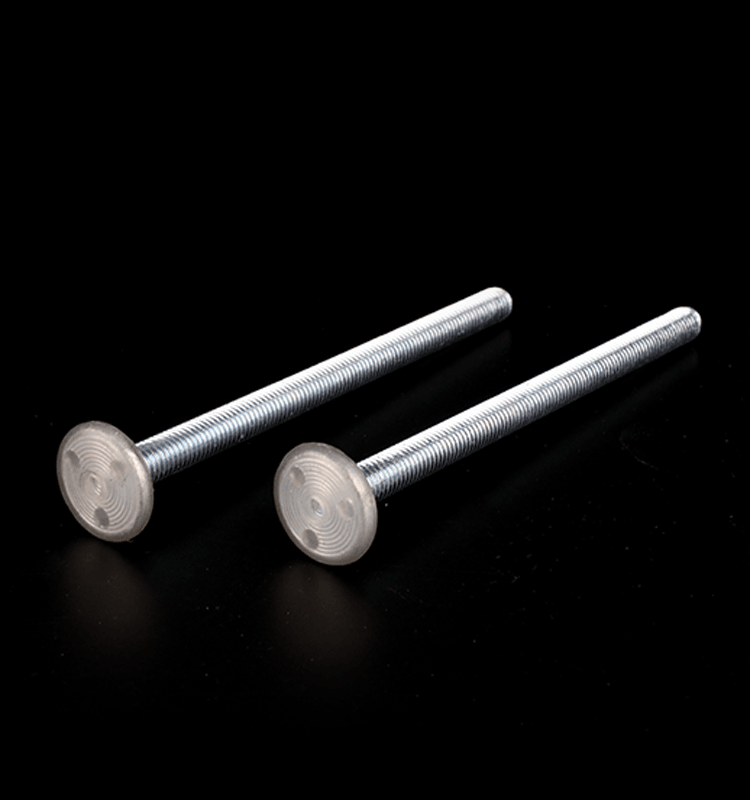 Wholesale Non-standard screw Suppliers, ManufacturersWe Wholesale Non-standard screw, Zhejiang Donghe Machinery Technology Co., Ltd. Is China OEM/ODM Non-standard screw Suppliers And Manufac...View Product →
Our in-house inspection capability covers dimensional checks, material verification, and finish-related testing, and we handle batch sizes from prototype to volume. If your next project involves a non-standard screw for a demanding environment, the fastest way to avoid a finish failure is to discuss the application environment with the manufacturer before the first batch runs.
Choosing the Right Finish Comes Down to Documentation
The best surface treatment for a non-standard screw is the one that matches the material, the environment, the strength class, and the assembly process — and that is documented so every party agrees on what was delivered. Define the thickness, the salt spray requirement, the embrittlement bake, and the thread class. Then verify the result on the first batch. If you do that, the finish will keep the screw intact and the connection reliable for the life of your product.