
Article Directory
- 1 I. The Criticality of Fastener Certification
- 2 II. Defining Stainless Steel Strength Grades
- 3 III. Verification via Tensile Testing Protocol
- 4 IV. Technical Comparison: A2-70 vs. A4-80
- 5 V. Conclusion: Precision for Non Standard Bolts
- 6 VI. Frequently Asked Questions (FAQs)
- 6.1 Q1: What does the '0.2' in 0.2% Proof Stress specifically represent in Rp0.2 yield strength verification for bolts?
- 6.2 Q2: Why is the tensile testing protocol for stainless steel fasteners more critical than simple chemical composition testing?
- 6.3 Q3: What determines the choice between A2-70 and A4-80 based on A2-70 vs A4-80 stainless steel strength properties?
- 6.4 Q4: Does the non standard bolts custom manufacturing process affect the required strength verification?
- 6.5 Q5: How does the stainless steel machine screw strength grade definition relate to carbon steel bolts?
I. The Criticality of Fastener Certification
In specialized industries—from automotive and aerospace to chemical processing—standard catalog fasteners often fail to meet unique dimensional or material specifications. This necessitates the use of non standard bolts, demanding precision in design and manufacturing. Regardless of their customized geometry, the mechanical performance of these fasteners, especially when made from stainless steel, must adhere to strict international strength grading standards like ISO 3506. Certifying these strength grades, such as A2-70 or A4-80, is essential for ensuring the longevity and safety of high-load assemblies.
Zhejiang Donghe Machinery Technology Co., Ltd. is a high-tech enterprise specializing in the development, manufacturing, and sale of fasteners. With continuous development and innovation since 2009, and having achieved ISO9001:2000 certification, we possess the technical capabilities and equipment (over 100 sets of machines) to customize various non standard bolts according to client requirements, alongside standard products (DIN, ANSI, GB), exporting our products globally.
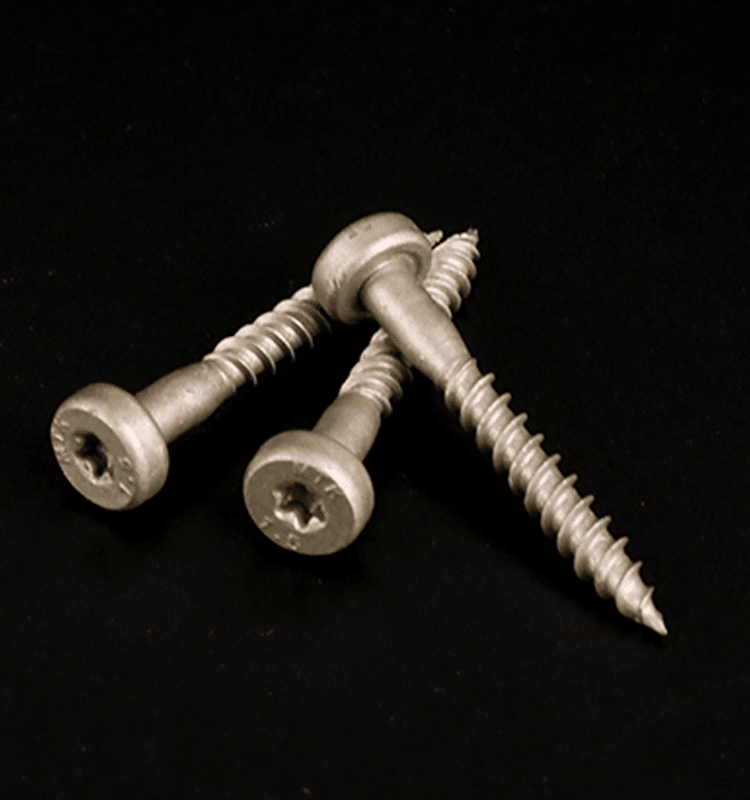
II. Defining Stainless Steel Strength Grades
The strength grade for stainless steel fasteners (like stainless steel machine screw) is defined by a two-part alphanumeric code, standardized under ISO 3506. This code provides essential information about both corrosion resistance and mechanical strength. For example, in the grade A2-70:
- The Material Class (A2 or A4) identifies the stainless steel type. 'A' stands for austenitic stainless steel. A2 is the common grade (equivalent to 304), and A4 is the molybdenum-alloyed grade (equivalent to 316), offering superior corrosion resistance, particularly against pitting and chlorides.
- The Strength Class (70 or 80) indicates the ultimate tensile strength in Megapascals (MPa) divided by ten. Thus, '70' means a minimum ultimate tensile strength of seven hundred MPa (or seventy kilograms-force per square millimeter).
A. Stainless steel machine screw strength grade definition Breakdown
The definition of these grades sets the minimum performance threshold that every compliant fastener must achieve.
| Grade (Example) | Material Type | Minimum Ultimate Tensile Strength (in MPa) | Minimum 0.2% Proof Stress (MPa) |
|---|---|---|---|
| A2-70 | Austenitic (304) | 700 MPa | 450 MPa |
| A4-80 | Austenitic-Molybdenum (316) | 800 MPa | 600 MPa |
III. Verification via Tensile Testing Protocol
Tensile testing is the definitive method to verify the mechanical properties of non standard bolts against the requirements of their stated strength grade. The tensile testing protocol for stainless steel fasteners, typically performed according to ISO 3506, involves placing the bolt in a universal testing machine and subjecting it to continuously increasing axial load until fracture.
A. Yield Strength (0.2% Proof Stress) Verification and Plastic Deformation
The most critical parameter for structural design is the Yield Strength, specifically the 0.2% Proof Stress. This value is the stress level (measured in MPa) at which the fastener begins to exhibit point-two percent permanent plastic strain. The core purpose of Rp0.2 yield strength verification for bolts is to ensure that under the maximum design load, the bolt only undergoes elastic deformation. If the load exceeds the 0.2% Proof Stress value, the bolt will permanently stretch, leading to bolt loosening, loss of clamping force, and potential failure of the joint.
B. Ultimate Tensile Strength (Rm) and Fracture Point
The Ultimate Tensile Strength (Rm) is the maximum stress achieved during the test before the material begins to neck and eventually fractures. While the 0.2% Proof Stress governs the elastic limit for design, Rm confirms the maximum capacity of the fastener and is the second key verification point required by the tensile testing protocol for stainless steel fasteners. The failure of non standard bolts to meet the minimum Rm confirms inadequate material quality or improper cold working during manufacturing.
IV. Technical Comparison: A2-70 vs. A4-80
The choice between A2-70 and A4-80 is a crucial engineering decision that balances cost, corrosion resistance, and load-bearing capacity. The A2-70 vs A4-80 stainless steel strength properties are distinctly different, particularly in the yield strength.
A4-80 provides a thirty-three percent increase in minimum yield strength (six hundred MPa vs four hundred fifty MPa) and a fourteen percent increase in ultimate tensile strength over A2-70. Furthermore, A4 (316 grade) offers significantly superior resistance to chloride-induced corrosion, making it essential for marine or chemical environments where A2 (304 grade) might fail prematurely due to pitting. The non standard bolts customized for high-stress applications in corrosive settings are almost always specified in A4-80.
| Strength Grade Metric | A2-70 (Standard Duty/Corrosion) | A4-80 (High Duty/Corrosion) | Design Implication |
|---|---|---|---|
| Min. Yield Stress (0.2% Proof Stress) | 450 MPa | 600 MPa | A4-80 can handle 33 percent higher sustained load without permanent deformation. |
| Corrosion Resistance | Good (General Purpose) | Excellent (Chloride/Pitting Resistance) | A4-80 is mandatory for marine/coastal and chemical processing. |
V. Conclusion: Precision for Non Standard Bolts
The integrity of any bolted assembly relies fundamentally on the certified strength of its fasteners. The mechanical properties, defined by the stainless steel machine screw strength grade definition (A2-70, A4-80), must be meticulously verified through rigorous tensile testing protocol for stainless steel fasteners. By focusing on Rp0.2 yield strength verification for bolts, engineers ensure joint security and longevity. Zhejiang Donghe Machinery Technology Co., Ltd. excels in the non standard bolts custom manufacturing process, ensuring that every fastener, regardless of its unique geometry, meets or exceeds the required strength class and material specification for global customer confidence.
VI. Frequently Asked Questions (FAQs)
Q1: What does the '0.2' in 0.2% Proof Stress specifically represent in Rp0.2 yield strength verification for bolts?
- A: The '0.2' represents the point-two percent permanent (plastic) strain offset. The 0.2% Proof Stress is the stress at which the fastener elongates point-two percent beyond its theoretical elastic extension, marking the transition from elastic, recoverable deformation to permanent plastic deformation.
Q2: Why is the tensile testing protocol for stainless steel fasteners more critical than simple chemical composition testing?
- A: While chemical testing confirms the material grade (A2 or A4), tensile testing verifies the stainless steel machine screw strength grade definition (70 or 80), which is achieved through cold working or heat treatment. A bolt made of A4 material but improperly treated will fail the 0.2% Proof Stress and Rm requirements, making tensile verification essential for safety.
Q3: What determines the choice between A2-70 and A4-80 based on A2-70 vs A4-80 stainless steel strength properties?
- A: The choice is based on the operational environment and required clamping force. A4-80 is chosen when high sustained load (due to higher 0.2% Proof Stress, six hundred MPa) is needed, or when the environment is corrosive (e.g., coastal, high-chloride), requiring the superior pitting resistance of A4 (316).
Q4: Does the non standard bolts custom manufacturing process affect the required strength verification?
- A: No. While the geometry is custom, the strength verification must still adhere to the relevant international standard (like ISO 3506) for the specified strength class. The non standard bolts custom manufacturing process requires specialized tooling, but the mechanical integrity standards remain universal.
Q5: How does the stainless steel machine screw strength grade definition relate to carbon steel bolts?
- A: Stainless steel uses the AX-YY designation (e.g., A2-70), where YY is Ultimate Tensile Strength divided by ten. Carbon steel bolts use a different metric, such as $8.8$ or $10.9$, where the first digit relates to the tensile strength (e.g., eight hundred MPa or one thousand MPa), and the second digit relates to the yield ratio (e.g., zero point eight times Ultimate Tensile Strength).