Article Directory
- 1 What Defines a Reliable Machine Screw Supplier?
- 2 The Procurement Factors That Actually Drive Selection
- 3 Quality Control and the Documentation Behind the Parts
- 4 Capacity, Lead Time, and Compliance
- 5 Non-Standard Machine Screws: When the Drawing Decides
- 6 A Supplier Scorecard for Industrial Buyers
- 7 FAQ
The purchasing manager for a machinery OEM opened a fresh quotation and saw M4x12 machine screws priced 25 percent below the current supplier. The drawing specified 304 stainless steel, a cross-recessed countersunk head, and a surface that had to survive a 72-hour salt spray test. Within a month, two batches failed inspection because the coating thickness drifted. The supplier was not dishonest; it simply could not hold tolerance across the production run. For industrial buyers, the real question is not who quotes the lowest price, but which supplier can repeat the same thread, head, and finish on every pallet.
A machine screw is a threaded fastener that engages a pre-formed internal thread and is specified by thread series, pitch, head geometry, and drive recess.
What Defines a Reliable Machine Screw Supplier?
A reliable machine screw supplier is one that can hold dimensional and material consistency from the first piece to the last, document that consistency, and still meet the quantity and lead time your production schedule demands.
Machine screws are not commodity bolts. They sit inside assemblies where tolerances are measured in hundredths of a millimeter. Thread pitch, flank angle, head-to-shank concentricity, and drive recess depth all affect how a screw seats, how much torque it accepts, and whether it strips when re-torqued.
On an automated assembly line, a slight variance in drive recess depth causes a driver to cam out. In safety-critical equipment, a hairline crack in the thread root turns a fastener into a fatigue failure. This is why machine screw supplier evaluation has to move beyond the catalogue page and into process control.
The Procurement Factors That Actually Drive Selection
Four factors decide whether a machine screw source can serve an industrial operation: material and traceability, thread and dimensional tolerance, coating or surface treatment consistency, and the ability to work from a non-standard drawing.
Material and traceability
Carbon steel grades 4.8 to 12.9, stainless steel 304 and 316, brass, aluminum, and titanium are the common machine screw materials. The supplier should state the grade, verify it with a material certificate, and select a coating that matches the service environment. For outdoor or marine duty, the difference between 304 and 316 stainless is often the difference between a five-year joint and a ten-year joint.
Thread and dimensional tolerance
Machine screw standards differ across systems. China's GB, Germany's DIN, the US ANSI, and the UK BS each define thread series, pitch, and head profiles. A supplier that manufactures to multiple standards gives buyers flexibility, but the important part is tolerance verification. A detailed machine screw type and sizing guide is useful here, because it shows how thread series and pitch map to a specific assembly. Go/no-go thread gauges and pitch diameter checks are the minimum evidence a buyer should accept.
Coating consistency
Zinc plating, hot-dip galvanizing, mechanical galvanizing, and baked paint finishes each provide different corrosion protection. A 72-hour salt spray requirement means the coating process must be controlled. An EPDM washer or a painted head adds another inspection point.
Print-driven capability
A supplier that only produces catalogue items cannot help with a special thread form or a custom head base. The ability to interpret a drawing, select the right material, and trial-produce a small batch marks a sourcing-grade machine screw supplier.
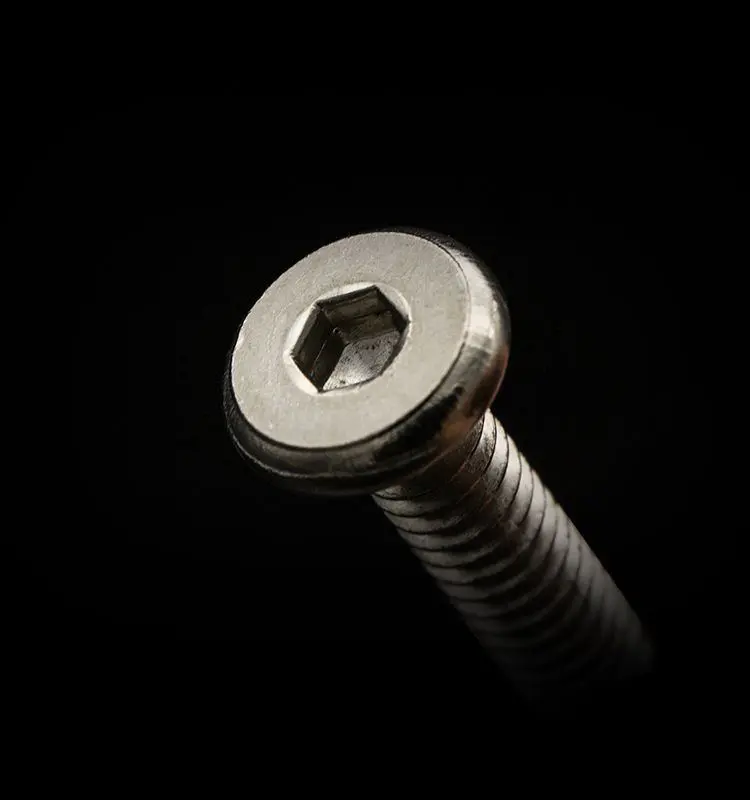 Hexagon Socket Machine Screw for Custom Precision FasteningFor sourcing-grade supply, this hex socket screw is designed for special thread forms and custom head bases, offering high torque and flush mounting for confined spaces in industrial applications.View Product →
| Material | Common Grades | Typical Application | Corrosion Consideration |
| Carbon steel | 4.8, 8.8, 12.9 | General industrial assembly | Requires protective finish |
| Stainless steel | A2-70 (304), A4-70 (316) | Outdoor, food, marine | 316 better in chloride |
| Brass | CuZn37 | Electrical, decorative | Good conductivity, lower strength |
| Aluminum | 6061 | Lightweight enclosures | Galvanic corrosion risk |
| Titanium | Grade 2, Grade 5 | Aerospace, medical | Excellent corrosion, high cost |
Quality Control and the Documentation Behind the Parts
The documents matter as much as the parts. A machine screw supplier that cannot produce material certificates, inspection records, and batch traceability is not a supplier; it is a risk.
- Material certificates that match the grade stated on the drawing.
- Salt spray test records that show coating performance over the required hours.
- Hardness and torque verification for each heat treatment batch.
- Go/no-go thread inspection for the full tolerance range.
A machine screw sourcing decision should include a review of the supplier's testing lab. Zhejiang Donghe Machinery Technology Co., Ltd. states it operates its own inspection laboratory and passed ISO9001:2000 in 2017. That kind of self-verification capability is exactly what a buyer should look for, because it means the supplier is checking its own work rather than relying on batched third-party inspections.
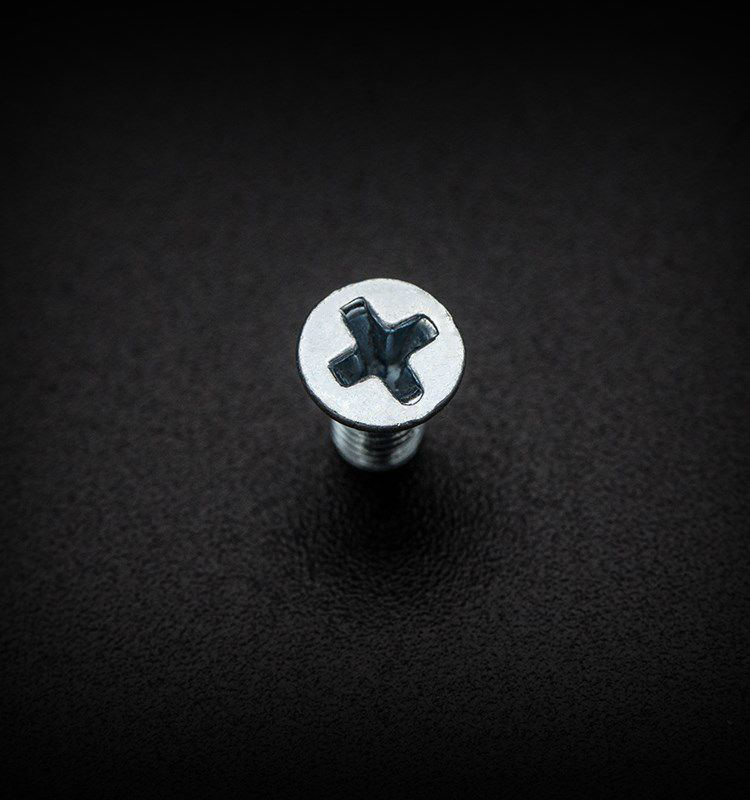 Countersunk Machine Screw with Self-Inspection CapabilityWith its own inspection lab and ISO9001:2000 certification since 2017, this countersunk machine screw ensures reliable quality control, making it a trusted choice for flush-requiring assemblies.View Product →
Capacity, Lead Time, and Compliance
Capacity and flexibility have a direct effect on your landed cost. A supplier that cannot scale up a small trial run into a 50,000-piece batch, or cannot keep export documentation clean, will force you to carry inventory and manage delays.
A machine screw supplier should be able to handle different order quantities without cutting corners. The same production line that runs a one-off prototype has to ramp up for a scheduled batch. The company states it can meet different customer order quantities, and it holds self-operated import and export rights, which matters for buyers in Europe, Australia, Africa, and the US.
Compliance is also part of lead time. For buyers in the EU, anti-dumping measures on Chinese fasteners are a real procurement consideration. A supplier that can produce the relevant trade remedy documentation will move goods faster through customs and reduce the risk of a surprise duty assessment.
Non-Standard Machine Screws: When the Drawing Decides
If your product survives on a fastener that cannot come off the shelf, you need a supplier that treats a drawing as a requirement document, not a suggestion.
Catalog machine screws
- Catalogue sizes and standard drive recesses
- Fixed thread forms and head profiles
- Short lead time, no tooling cost
- Limited ability to solve a unique fastening problem
Non-standard machine screws
- Custom head geometry and drive recess
- Modified thread pitch or special heat treatment
- Tooling and first-article inspection add time
- Exact fit for your assembly and performance target
Many industrial machine screws cannot be replaced by an off-the-shelf part. A proprietary drive recess may be needed to prevent tampering, an oversized shank to fill a clearance hole, or a special heat treatment to reach a high-strength joint. The vendor should take a drawing, trial-produce a small batch, and test the custom part for strength and corrosion.
The same custom capability should extend across materials. When your application calls for stainless steel machine screw grades, or for aluminum, brass, or titanium, the supplier should be able to quote the non-standard version, not just the catalogue item.
 Non-Standard Screw for Diverse Material RequirementsWhen applications demand stainless steel, aluminum, brass, or titanium, this non-standard screw supports material flexibility, enabling custom solutions beyond standard catalogue items.View Product →
A Supplier Scorecard for Industrial Buyers
A simple scorecard keeps a machine screw supplier evaluation objective and comparable across vendors.
Quality gets the highest weight because a fastener failure inside an assembled product costs far more than the fastener itself. Delivery comes second because schedule drift stops the line. Price matters, but it has to be assessed as total landed cost, including inspection rejects and rework. The scorecard should be completed with evidence from the inspection records, material certificates, and trial batch results discussed above.
FAQ
What is a machine screw, and how is it different from a bolt?
A machine screw has external threads that engage a pre-formed internal thread, usually in a tapped hole or a nut. It is measured by thread series, pitch, head geometry, and drive recess. A bolt may require a nut and engages through a clearance hole. In everyday procurement language the two words are often used interchangeably, but the standard systems draw a clear line.
What type of machine screw material should a buyer choose?
For dry indoor applications, zinc-plated carbon steel is cost-effective. For outdoor, food, or marine environments, use stainless steel grade 304, and grade 316 if chloride exposure is high. Brass works well for electrical or decorative applications. Titanium and related alloys are used only where strength-to-weight ratio or corrosion resistance makes them necessary.
How can a buyer verify a machine screw supplier's quality control?
Ask for material certificates, salt spray test records, hardness test reports, and go/no-go thread gauge inspection results. Review the supplier's on-site lab capability, and request a small trial batch before the full production run.
Can machine screw suppliers make non-standard sizes and thread forms?
Most full-service fastener manufacturers can. The key is whether the supplier can work from a drawing or sample, develop tooling, produce a small trial batch, and test the custom part for strength and corrosion. Look for a supplier that tracks custom parts as a separate product line, not as an afterthought.