Article Directory
- 1 What Thread Design Actually Controls
- 2 Coarse or Fine Pitch: The First Fork in the Road
- 3 Match the Thread Form to the Fastening Function
- 4 Material, Coating, and Tolerance Class: The Hidden Variables
- 5 A Five-Step Selection Sequence You Can Use Today
- 6 What to Hand Your Manufacturer Before You Place the Order
The thread design of a custom screw decides whether the fastener will hold, strip, or snap in service. Everything else, including material grade and coating, is secondary to that geometry. A case from our engineering review illustrates the point: an M6 screw with a 1.0 mm pitch and a sharp 60-degree thread form was specified for a 3 mm aluminum extrusion. The prototype looked correct, but the first installation test stripped the thread in less than ten seconds. The thread was too fine for the wall thickness, and the sharp root concentrated stress where the aluminum had the least material to work with. The screw was rebuilt with a different thread profile and passed the same test without issue. Choosing the right thread design is not a drawing detail; it is the decision that determines field performance.
What Thread Design Actually Controls
Thread geometry controls four measurable behaviors: how the screw engages the mating material, how much torque is required to drive it, how much axial clamping force it can generate, and how it fails under overload. Change the flank angle and you change the radial force pushing outward against the hole wall. Change the pitch and you change the mechanical advantage of each rotation. Change the thread depth and you change the volume of material available to resist pull-out. All four variables interact, which is why extending a standard screw length and keeping the original thread rarely produces a reliable custom fastener.
The variables that matter most in custom screw design are the thread form (the shape of the profile), the pitch, the thread depth, and the number of starts. Standard ISO metric threads use a 60-degree V-form, but custom screws are not limited to it. Buttress, trapezoidal, and asymmetrical profiles exist for specific load directions. The practical selection sequence starts with the substrate, then the driving method, then the load case. For a wider view of how these variables affect parts beyond screws, see our guide on designing non-standard bolts for industrial applications.
Coarse or Fine Pitch: The First Fork in the Road
The most common error in custom screw specifications is choosing pitch by habit rather than by analysis. Pitch sets the lead angle, the thread engagement area, and the installation speed. A coarse thread (for example, M6 with a 1.0 mm pitch) has a larger lead, installs faster, and tolerates dirt, paint, and minor hole damage better. A fine thread (M6 with a 0.75 mm pitch) has a smaller lead, offers more precise axial positioning, and provides a larger tensile stress area for the same nominal diameter.
When a Coarse Thread Is the Right Call
Coarse threads perform better in softer substrates: wood, particleboard, low-density plastics, and thin sheet metal. The deeper, wider thread spaces cut into the material rather than displacing it, so installation torque stays lower and stripping resistance improves. Coarse threads are also the safer choice when the fastener will be removed and reinstalled repeatedly, because the wider clearance tolerates thread wear and contamination.
When a Fine Thread Is the Right Call
Fine threads excel in hard or thin-walled materials, where a coarse thread would leave too little material between consecutive threads and weaken the cross-section. They are preferred for fine adjustment, for high-strength steel assemblies where the larger tensile stress area contributes to fatigue life, and for metal joints exposed to vibration, because the smaller helix angle reduces the self-loosening tendency. The trade-off is higher sensitivity to thread damage and a greater need for controlled driving torque.
| Factor | Coarse Thread | Fine Thread |
|---|---|---|
| Installation effort | Faster, lower torque | Slower, higher torque |
| Stripping resistance in soft materials | Higher | Lower |
| Tensile stress area | Smaller | Larger |
| Adjustment precision | Lower | Higher |
| Vibration loosening tendency | Higher without preload control | Lower in metal joints |
| Tolerance to dirt and thread damage | Better | Worse |
| Typical substrates | Wood, plastic, sheet metal | Hard metal, thin walls |
Match the Thread Form to the Fastening Function
The 60-degree V-thread is an all-rounder, but many custom screws need a different profile to perform their specific job. The choice of thread form follows directly from what the screw is supposed to do during installation and in service.
Self-Tapping and Self-Drilling Threads
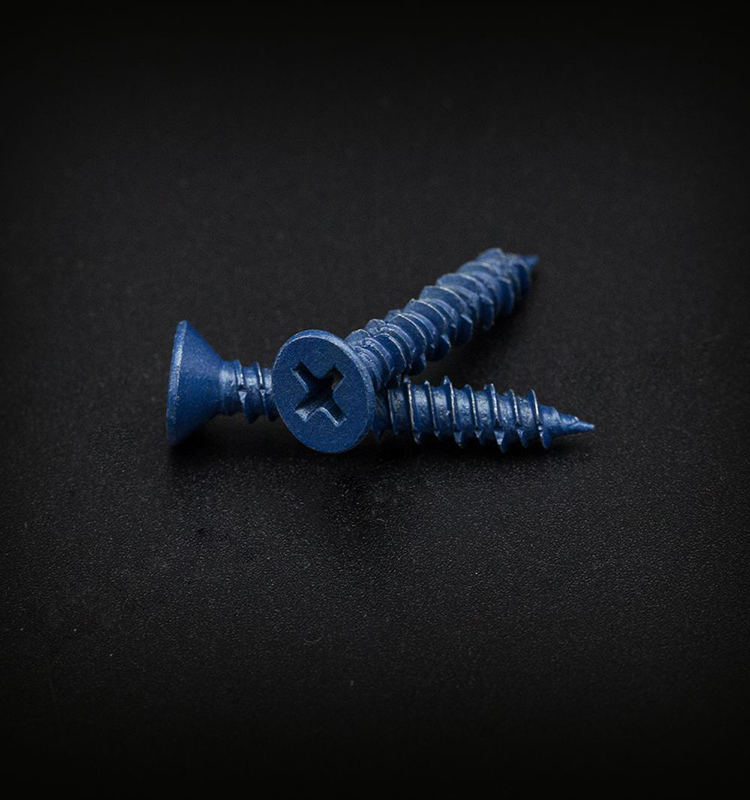
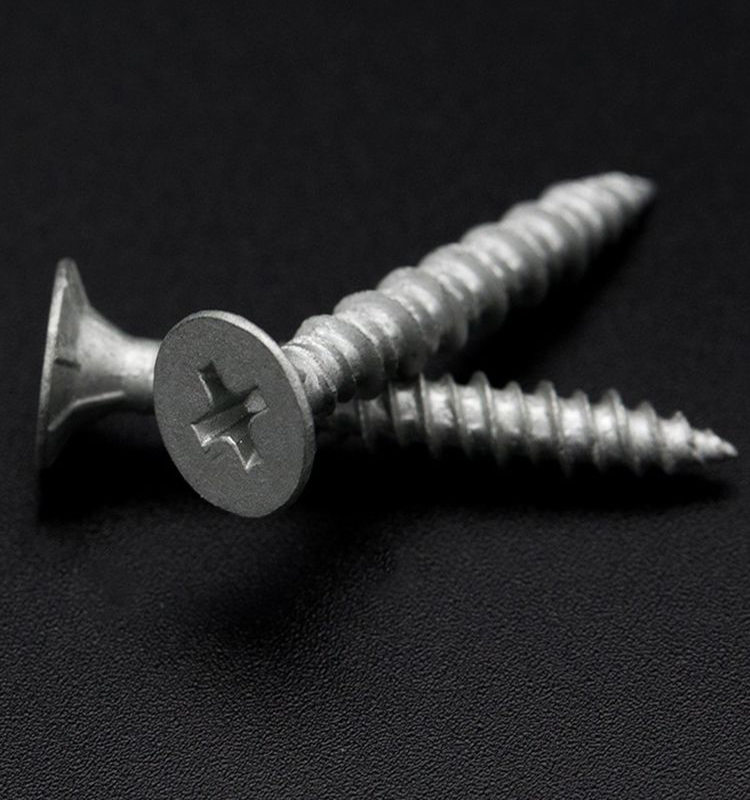
A self-tapping screw cuts or forms its own mating thread, so the thread profile has to do work that a standard machine screw thread never performs. These designs typically use a sharper flank angle, deeper thread, and a case-hardened surface so the cutting edge remains effective over a consistent driving depth. Self-drilling versions add a drill point that removes material before the thread engages; if the thread geometry is not matched to the point length, the screw will fail to seat or will strip the hole it just created. Our self-tapping screw range covers the common geometries across different head styles and drive systems.
 Custom Brass Self Tapping Screws Manufacturers, Factory, ExportersZhejiang Donghe Is China Brass Self Tapping Screws Manufacturers, Factory, Exporters, We Can Customize Brass Fasteners/Nuts/Screws Accord...View Product →
High-Low Threads for Soft and Thin Substrates
The high-low thread design alternates two different root diameters. The higher thread carries the load, while the lower thread reduces driving torque and leaves room for displaced material to flow. In particleboard, plastic, and thin-gauge steel, this dual-profile geometry delivers markedly better pull-out resistance than a conventional thread of the same nominal size. If the custom screw must hold in a soft or low-density substrate, high-low thread screws often determine whether the part passes or fails a pull-out test.
 Custom DIY Electronic and Electrical Fasteners Manufacturers, Factory, ExportersZhejiang Donghe Machinery Technology Co., Ltd. is China DIY Electronic and Electrical Fasteners Manufacturers And OEM/ODM DIY Electronic ...View Product →
Standard Machine Threads and Their Limits
When a custom screw will mate with a standard tapped hole or a nut, the thread form must comply with the applicable standard: ISO metric, UNC/UNF, or BS profiles. In this case, the custom portion is usually the head, length, material, shank, or coating, not the thread itself. Keep the thread within the standard tolerance grades so the fastener can be gauged and will assemble with off-the-shelf mating parts. Deviating from the standard profile for aesthetic reasons almost always creates a sourcing problem downstream.
Material, Coating, and Tolerance Class: The Hidden Variables
A thread drawing is incomplete until material hardness, coating thickness, and tolerance class are defined together. Zinc plating, for example, adds roughly 5 to 8 micrometers per surface. If the screw is manufactured to a 6g tolerance and then plated to the maximum thickness, the finished pitch diameter can move outside the acceptable zone, producing joints that are too tight. The correct practice is to specify the tolerance class for the finished, coated part rather than for the bare thread. Mechanical galvanizing and hot-dip galvanizing add far more thickness and require a deliberate pitch-diameter allowance in the thread design itself.
Hardness changes the picture as well. A thread form that works perfectly in annealed stainless steel will chip or fracture if the same geometry is machined in a high-hardness martensitic grade above roughly 45 HRC. As a rule, keep the thread profile generous with a larger root radius when the material is hard, and reserve aggressive sharp profiles for soft, ductile substrates. When the application requires a standard thread mated to a custom head or material, our overview of custom machine screws for unique applications explains the practical limits.
A Five-Step Selection Sequence You Can Use Today
If you are starting from a blank drawing, work through this order to avoid the most common mismatches.
- Define the substrate precisely. Identify the exact material, hardness, wall thickness, and whether it will be predrilled or drilled during installation.
- Define the load case. Decide whether pull-out strength, shear strength, or fatigue resistance dominates, and note the direction of the load.
- Choose the thread type. Select self-tapping, self-drilling, high-low, or standard machine thread based on the substrate and installation process.
- Set the pitch and thread depth. Use a coarse pitch for soft materials and a fine pitch for hard, thin, or precision-mated joints.
- Define the tolerance class and coating together. Confirm the finished pitch diameter against the coating thickness and verify with a go or no-go gauge before production.
This sequence does not replace engineering calculation, but it eliminates the trial-and-error loop that drives up cost and lead time. Most failed custom screw projects fail at step one, not because the material was wrong, but because the thread geometry was never matched to the actual substrate.
What to Hand Your Manufacturer Before You Place the Order
A custom screw order moves quickly when the buyer supplies four things: a drawing or sample, the substrate material and hardness, the driving method (manual driver, cordless tool, or automated assembly line), and the performance target (pull-out force, torque-to-fail, or corrosion resistance). The drawing does not need to be perfect. A 2D sketch with nominal sizes and tolerances is sufficient for a first quotation, provided the application details are attached. Ambiguous orders produce long email chains and prototypes that miss the application entirely.
A manufacturer that produces both standard and non-standard fasteners can usually flag thread-design problems before tooling is cut. At Zhejiang Donghe, we review every custom screw inquiry against the substrate and assembly condition, and we adjust the thread geometry in the proposal stage when the numbers do not close. Our custom non-standard screw production handles thread forms, head styles, and materials outside the standard catalog, and the same engineering review applies whether the order is one prototype or a container load. For the full breakdown of drawing requirements, lead time, and cost drivers, see our guide to ordering non-standard bolts.
Custom DIY Industrial Mechanical Fasteners Manufacturers, Factory, ExportersZhejiang Donghe Machinery Technology Co., Ltd. is China DIY Industrial Mechanical Fasteners Manufacturers And OEM/ODM DIY Industrial Mech...View Product →
One final reminder: settle the thread design before spending money on coatings, head markings, or packaging. Thread geometry is the cheapest thing to change on paper and the most expensive thing to change after production begins.