Article Directory
In industrial applications, selecting the right fastener is crucial for ensuring the strength and longevity of projects involving fiberboard. From cabinetry to furniture, the integrity of the final product hinges on the correct use of a Fiberboard Nail or screw. However, not all fasteners are equal, and understanding the nuances of different fiberboard types is key to a successful build. This guide provides an in-depth look at how to select the best fastening solutions for MDF, HDF, and particle board.
The Core Challenge: Understanding Fiberboard's Unique Composition
Fiberboard materials are engineered wood products made from wood fibers, wax, and a resin binder. Unlike natural wood, which has a grain structure, fiberboard's homogeneous nature means fasteners rely entirely on the material's internal friction and density for their grip. This requires a different approach to fastening, as using a standard nail or screw can lead to material splitting, swelling, or poor pullout resistance over time. The key is to match the fastener's properties—such as its shank design, threading, and coating—to the specific characteristics of the fiberboard.
Why Fiberboard Poses a Unique Fastening Challenge
Fiberboard's uniform density, while beneficial for cutting and finishing, presents a unique challenge for fasteners. Without a natural grain to grip, the holding power of a nail or screw depends on how effectively it displaces and compresses the wood fibers. A fastener that is too large can cause the material to blow out, while one that is too small will have insufficient holding power. This delicate balance is why specialized fastening solutions are so vital in professional applications.
Key Factors for Fastener Selection
- Material Density: The density of the fiberboard is the single most important factor. For example, HDF (High-Density Fiberboard) can have a density of 600-800 kg/m³, while particle board may be as low as 450-600 kg/m³. This variance directly impacts the required fastener type.
- Application Load: Consider the weight and stress the joint will bear. Joints under high shear or tensile stress require more robust fasteners. For instance, a cabinet hinge must withstand continuous cyclical loads, while a decorative panel joint may only need to resist minor forces.
- Environmental Conditions: The presence of moisture or corrosive elements dictates the need for specialized coatings, such as galvanization, to prevent rust and degradation over the product's lifespan.
Matching the Fastener to the Fiberboard Type
The type of fiberboard is the primary factor in determining the correct fastener. Here's a breakdown of recommended solutions for each common type.
Fastening Solutions for MDF (Medium-Density Fiberboard)
MDF is a workhorse in many industries, known for its smooth surface and uniform consistency. However, its compressed nature makes it prone to swelling if moisture enters the screw hole. The ideal fasteners have a deep, aggressive thread to bite into the dense material without causing it to crack or split.
MDF nail holding power test and Screw Comparison
While a Fiberboard Nail can be used, screws generally offer superior holding power in MDF. Numerous studies and real-world **MDF nail holding power test** have shown that specially designed screws provide a significantly stronger and more reliable hold than standard nails. Screws distribute the load over a larger surface area via their threads, while nails rely on the much smaller surface area of the shank.
- Recommended Fasteners for MDF:
- Screws: Coarse-thread screws with a wide shank (e.g., #8 or #10 gauge) and a sharp point for easy penetration. The length should be at least three times the thickness of the piece being fastened.
- Nails: For a Fiberboard Nail, opt for ring shank or barbed nails to create a mechanical lock that increases pullout resistance.
- Parameters:
- Screw Gauge: #8 to #10 for most applications.
- Thread Pitch: Coarse threads (approx. 8-12 TPI).
- Fastener Length: Rule of thumb is 2.5-3x the thickness of the top piece.
Fastening Solutions for HDF (High-Density Fiberboard)
HDF is significantly denser than MDF, making it more durable but also more susceptible to splitting during fastening. Precision is key to a clean, strong joint. The high density requires fasteners that can penetrate cleanly without causing the material to swell or splinter. Pilot holes are almost always a necessity.
Best screws for HDF board
Due to its high density, HDF requires fasteners with a sharp point and often a self-drilling tip to prevent material compression and blow-out. The **best screws for HDF board** are those with fine threads, as they create a more secure grip in the highly compressed material. The finer threads reduce the amount of material displacement during insertion.
- Recommended Fasteners for HDF:
- Screws: Fine-thread screws with a sharp, pointed tip.
- Nails: Use thin-shanked nails with a sharp point.
- Parameters:
- Screw Gauge: #6 to #8 is often sufficient.
- Thread Pitch: Fine threads (approx. 16-24 TPI).
- Pilot Hole Diameter: Should be slightly less than the screw's core diameter to allow threads to bite.
Fastening Solutions for Particle Board
Particle board is the least dense of the three and is composed of wood chips, making it the most vulnerable to damage during fastening. Over-tightening can easily strip the hole and destroy the joint. The key to effective **particle board fastening solutions** is to use fasteners with a wide shank and coarse threads that can grip the fragmented core without causing the material to crumble or blow out.
- Recommended Fasteners for Particle Board:
- Screws: Coarse-thread screws specifically designed for particle board, often with a large head to distribute the load.
- Nails: Ring shank nails for improved pullout resistance.
- Parameters:
- Screw Gauge: #10 to #12 for better grip.
- Fastener Head: Wafer or pan heads are preferred for a larger bearing surface.
- Torque Setting: Use a low-torque setting on your driver to prevent stripping the hole.
Material and Design: The Difference Makers
Beyond the core material, the design and finish of the fastener itself play a crucial role in performance and durability. Two of the most important aspects are the shank design and the fastener's coating.
The Role of Shank Design
The shank is the body of the nail, and its design has a direct impact on holding power. This is where the difference between a smooth and a ring shank nail becomes critical for industrial use.
Ring shank fiberboard nail vs smooth shank
There is a significant difference between a **ring shank fiberboard nail vs smooth shank**. A smooth shank nail relies on a simple friction grip, which can easily fail over time due to vibrations or cyclical loads. In contrast, a ring shank nail has a series of rings or threads on its shank that act like a ratchet, locking into the wood fibers to create a mechanical bond. This design makes it significantly more resistant to pullout, which is why it is preferred for applications requiring long-term durability and structural integrity.
| Feature | Smooth Shank Nail | Ring Shank Nail |
|---|---|---|
| Holding Power | Low to Moderate | High (Excellent Pullout Resistance) |
| Applications | Temporary or low-stress joints | Structural, high-stress, and permanent applications |
| Cost | Lower | Higher |
The Importance of Coatings and Finishes
A fastener's finish provides both corrosion resistance and improved holding power. Choosing the right coating is essential for the longevity of the final product, especially in non-climate-controlled environments.
Galvanized fiberboard nails for corrosion resistance
For applications in humid environments or where the product may be exposed to moisture, a standard steel nail will quickly rust and lose its strength. **Galvanized fiberboard nails** are coated with a layer of zinc, which provides a barrier against moisture and prevents rust. This is a critical consideration for any outdoor or high-moisture application, ensuring the fastener maintains its integrity over time.
- Common Coatings:
- Galvanized: Excellent for outdoor use and moisture resistance. A standard hot-dip galvanization provides a thick, durable coating.
- Phosphate Coated: A black finish that provides moderate rust resistance and improved friction, ideal for interior applications.
- Polymer Coated: Can reduce friction during insertion, preventing material blowout, while also increasing pullout strength.
Final Considerations for Industrial Applications
Achieving a professional-grade result with fiberboard requires more than just selecting the right fastener. Proper technique and preparation are equally important to prevent common issues and ensure the longevity of the product.
Preventing Common Fastening Issues
- Pilot Holes: Always pre-drill pilot holes, especially in denser HDF and MDF, to prevent splitting. The pilot hole diameter should be slightly smaller than the core diameter of the screw.
- Proper Sizing: Ensure the fastener length is at least three times the thickness of the material being attached to ensure a secure grip.
- Controlled Torque: For screws, use a clutch-equipped driver to prevent stripping or blowout. The torque setting should be adjusted to the material's density.
A Quick Reference Guide to Fastener Selection
This table summarizes key recommendations for different fiberboard types.
| Fiberboard Type | Recommended Fastener | Key Considerations |
|---|---|---|
| MDF | Coarse-thread screws, Ring Shank Nails | Screws offer superior holding power. Consider density. |
| HDF | Fine-thread screws, Thin-shanked nails | Pilot holes are essential to prevent splitting. |
| Particle Board | Coarse-thread screws, Ring Shank Nails | Avoid over-tightening. Use washers to distribute pressure. |
Frequently Asked Questions
1. Why should I choose a specialized fastener for my fiberboard project?
Standard nails and screws may not provide the necessary holding power or can damage the material during installation. Specialized fasteners, such as those with ring shanks or specific thread designs, are engineered to work with the unique properties of fiberboard, ensuring a stronger, more reliable, and longer-lasting bond. For high-volume industrial projects, using the correct fastener saves time, reduces material waste, and improves product quality.
2. How can I ensure I select the right fastener for my specific needs?
To choose the optimal fastener, you need to consider the type of fiberboard (MDF, HDF, or particle board), the load the joint will bear, and the environmental conditions of the final product. For guidance on selecting the right fastener for your project, our technical experts at Zhejiang Donghe Machinery Technology Co., Ltd. can provide support and recommendations. We specialize in producing a wide range of industrial fasteners that meet various international standards and can also customize products for specific applications.
3. Who can provide professional and reliable fasteners for my business?
Zhejiang Donghe Machinery Technology Co., Ltd. is a high-tech enterprise specializing in the development, manufacturing, and sales of fasteners and other products. Located at 1858 Jiagang Road, Xinfeng Town, Jiaxing City, our company has continuously developed and innovated since its founding on September 6th, 2009. We have over 100 sets of advanced machinery, over 100 employees, and a production capacity of 8000 tons. In 2017, we passed the ISO9001:2000 quality management certification and hold self-operating import and export rights. Our product range includes Chinese GB, German DIN, American ANSI, and British B standards, and we can also customize non-standard fasteners. Our products are exported to Europe, Australia, Africa, the United States, and other regions, backed by our commitment to "pragmatism, innovation, integrity, and efficiency" and a focus on long-term partnerships with our clients.
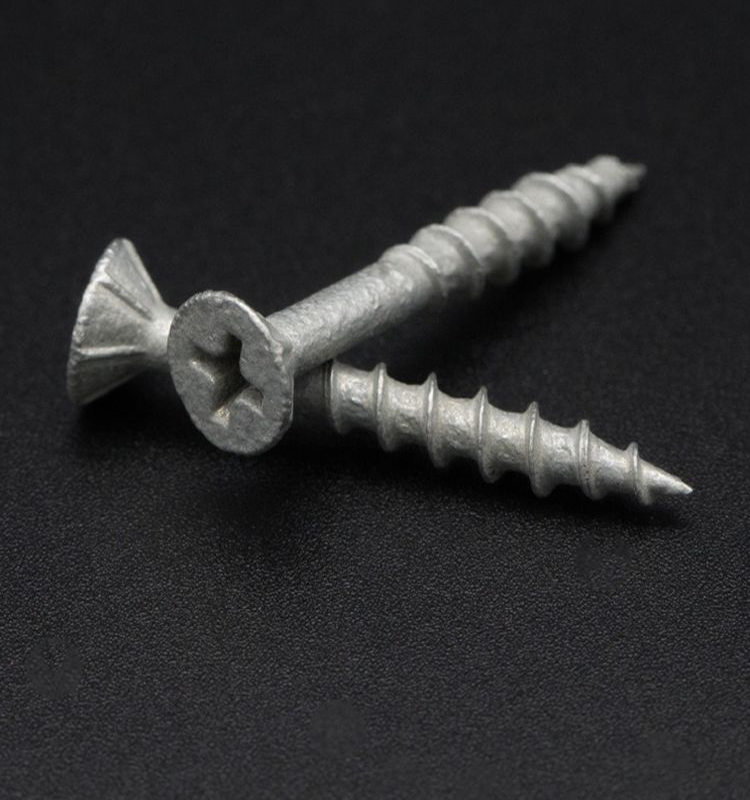
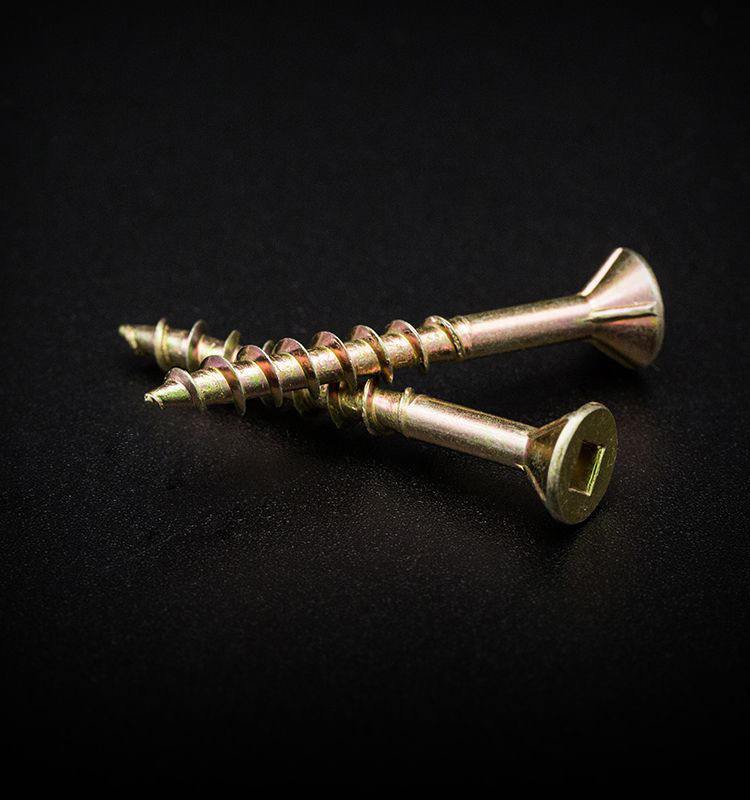
Cross countersunk head coarse fiberboard nails (hot-dip galvanized, with 6 ribs)