Article Directory
An electrical contractor in Hamburg rejected a delivered batch of brass M4 machine screws because torque-to-failure values dropped 28 percent below the agreed limit. The material certificate had never been requested, and the supplier had replaced free-cutting C36000 with a recycled yellow-brass stock. That incident is the shortest possible summary of why brass machine screws deserve alloy-level scrutiny rather than a quick check of the head style.
What Defines a Brass Machine Screw
A brass machine screw is an external-thread fastener machined from a copper-zinc alloy and installed into a pre-tapped hole, nut, or threaded insert, rather than forming its own mating thread.
The alloy, not the thread geometry, determines most service behavior. Copper-zinc alloys with roughly 55 to 70 percent copper supply good cold-heading and machining characteristics; the exact proportion of zinc, lead, tin, and arsenic controls strength, corrosion resistance, and machinability.
Alloy grades that appear in real procurement documents
- C36000 free-cutting brass: about 61.5 percent copper, 35.5 percent zinc, and 3 percent lead; the default for turned machine screws because chips break cleanly and threads cut accurately.
- C27000 and C26000 yellow brass: higher formability with slightly lower machinability; common for rolled threads and decorative head styles.
- C46400 naval brass: a 1 percent tin addition improves resistance to saltwater attack; used where marine installation meets moderate loading.
- CW602N dezincification-resistant brass: arsenic-alloyed grade approved for potable-water fittings; relevant for instrument and valve hardware.
Mechanical and Physical Properties That Govern Selection
Brass machine screws sit below stainless and alloy steel in strength, but they outperform both on electrical conductivity, corrosion resistance in non-chloride environments, and non-magnetic behavior.
Parameter comparison across three common materials
| Property | Brass C36000 | Stainless 304 A2-70 | Carbon steel 4.8 zinc-plated |
| Tensile strength (MPa) | 380-450 | 700 | 400 |
| Yield strength (MPa) | 250-310 | 450 | 320 |
| Electrical conductivity (%IACS) | 28 | 3-5 | 10-14 |
| Magnetic response | Non-magnetic | Non-magnetic | Magnetic |
| Relative material cost index | 3.5 | 2.2 | 1.0 |
Typical tensile strength of machine screw materials (MPa)
Application Fit: When Brass Is the Correct Engineering Call
Choose brass machine screws when conductivity, corrosion resistance in fresh water or humid air, aesthetic matching, or the need to avoid magnetic interference matters more than maximum static strength.
-
Electrical terminals and earthing assemblies
Brass carries about 28 percent IACS and its oxide layer remains conductive. The machine-screw thread holds a terminated lug firmly, and the non-magnetic body does not disturb sensitive instrumentation.
-
Instrument panels and fine-pitch assemblies
Free-cutting brass produces clean 6g threads in M2 to M6 sizes with minimal tearing. The grade is therefore a first choice for optical mounts, valve actuators, and control-panel hardware that is repeatedly removed for calibration.
-
Freshwater and high-humidity interiors
In freshwater systems and coastal interior fittings, brass develops a protective patina instead of the red rust that stains surrounding surfaces. Limit exposure to chlorinated pools and salt spray, where 316 stainless is the safer grade.
-
Architectural and furniture hardware
Visible exposed hardware depends on color match. Brass screws align with brass knobs, hinges, and trims without creating the rust-streak contrast that carbon-steel fasteners leave on light timber.
Specify brass when
- The joint must conduct current
- The finish must match copper-alloy hardware
- Freshwater or mild humidity dominates exposure
- Frequent disassembly for service is expected
Specify 304 stainless when
- Chloride-rich exposure is possible
- Preload and fatigue life drive the design
- High tightening torque is required
- Temperature exceeds 200 degrees Celsius
Procurement, Tolerances, and Supply Considerations
On a brass machine screw request for quotation, the six data points that prevent field failures are alloy grade, dimensional tolerance class, head and drive style, surface condition, material certificate, and packaging that protects the threads.
- Alloy grade stated as C36000, C46400, or CW602N, never simply the word brass.
- Tolerance class 6g for the external thread with ISO metric pitch; 6H for the mating nut thread.
- Drive type: slotted, Phillips, Pozidriv, or hex socket; mismatched driver geometry is a common field complaint.
- Surface condition: bare polished, lacquered, or tin and nickel plated; if plated, confirm thickness and test method.
- Batch certificate showing copper and zinc content, lead content, and hardness range.
- Packaging: partitioned cartons or strip packs that prevent thread-to-thread damage during freight.
Zhejiang Donghe Machinery Technology Co., Ltd. is a manufacturer of machine screws, brass fasteners, and supporting nuts under GB, DIN, ANSI, and BS standards. The company reports an annual capacity above 8,000 tonnes, more than 100 production machines, an internal test laboratory, and ISO 9001 quality management certification, with export destinations that include Europe, Australia, Africa, and the United States.
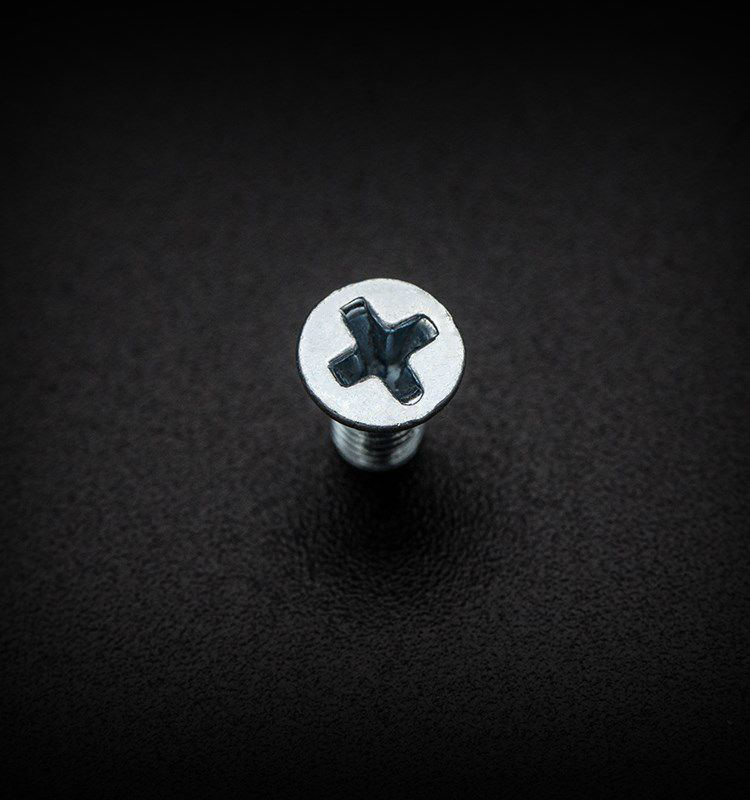 Countersunk Machine Screw for Flush Precision FasteningThis countersunk screw is designed for flush mounting in metal, wood, or composites. Heat-treated steel construction and precision threads make it worth reviewing for strength-sensitive assemblies.View Product →
For a wider view of how brass compares with other machine-screw material families, read our guide to common materials used for machine screws.
 Brass Nut with Custom Sizing OptionsMachined from brass for corrosion resistance and conductivity, this nut supports custom diameter, thickness, and thread pitch. Suitable for prototype and production quantities, check here for non-sparking needs.View Product →
Buyers shipping to the European Union should also track trade-remedy status for fastener categories; the published EU fastener anti-dumping final determination directly affects import classification and pricing decisions.
 Brass Hardware Fastener Set for Demanding ApplicationsThis multi-application set includes bolts, nuts, washers, and threaded inserts in brass alloys like C36000, C46400, and C48500. It fits marine, electrical, and industrial uses where reliable performance is key.View Product →
Frequently Asked Questions
Can brass machine screws be used outdoors in coastal areas?
Yes, with limits. In direct saltwater and heavy salt-air exposure, standard yellow brass can dezincify; choose naval brass C46400 or switch to 316 stainless for chloride-rich zones.
Are brass machine screws stronger than stainless steel?
No. Brass C36000 typically reaches 380 to 450 MPa tensile strength, while 304 stainless fasteners in the A2-70 class reach about 700 MPa. Use stainless where joint strength dominates.
Do brass machine screws require a plated finish?
No. Brass forms a protective oxide layer on its own. Plating is applied for appearance, such as nickel or lacquer, or for specific galvanic compatibility, but it is not required for basic indoor corrosion protection.
Will brass screws corrode when fastened into aluminum?
Brass and aluminum sit far apart on the galvanic series; in wet conditions, the aluminum part can corrode preferentially. Use a separating washer, thread sealant, or anodizing where moisture is expected.